
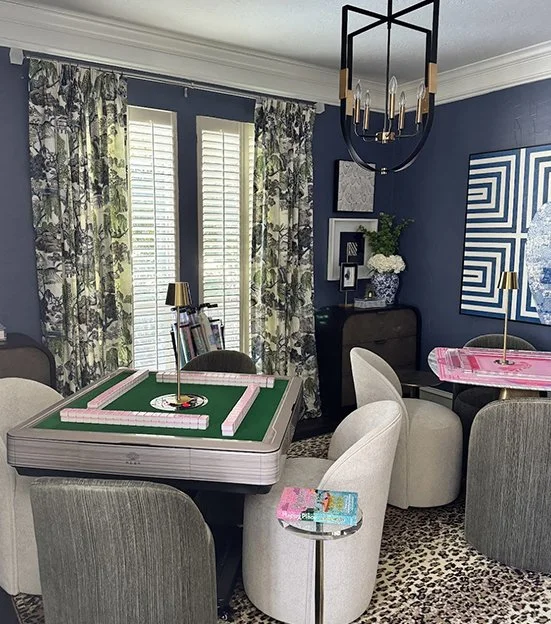
Mahjong has quietly become one of the most meaningful social rituals in today’s homes. What begins as a game often turns into a standing weekly gathering—friends arriving early, tiles shuffled with intention, drinks poured, laughter layered between strategy and tradition. For many, mahjong is less about winning and more about connection. It’s an experience rooted in focus, familiarity, and time spent together, which is precisely why the space where it’s played matters far more than people expect.
A well-designed mahjong room supports the rhythm of the game and the people who play it. The scale of the table, the comfort and mobility of the chairs, the lighting, the circulation—all of it shapes how the game feels and how long players linger. When these details are thoughtfully considered, the room becomes more than a place to play; it becomes a destination within the home. One that invites return, encourages hospitality, and reflects a lifestyle centered on intentional living and gracious entertaining.
What Makes a Great Mahjong Room
A successful mahjong room is designed around how the game is played—and how the host lives. While every space is different, the most memorable mahjong rooms share a few essential characteristics that elevate the experience without calling attention to themselves.
1. A Table That Anchors the Room
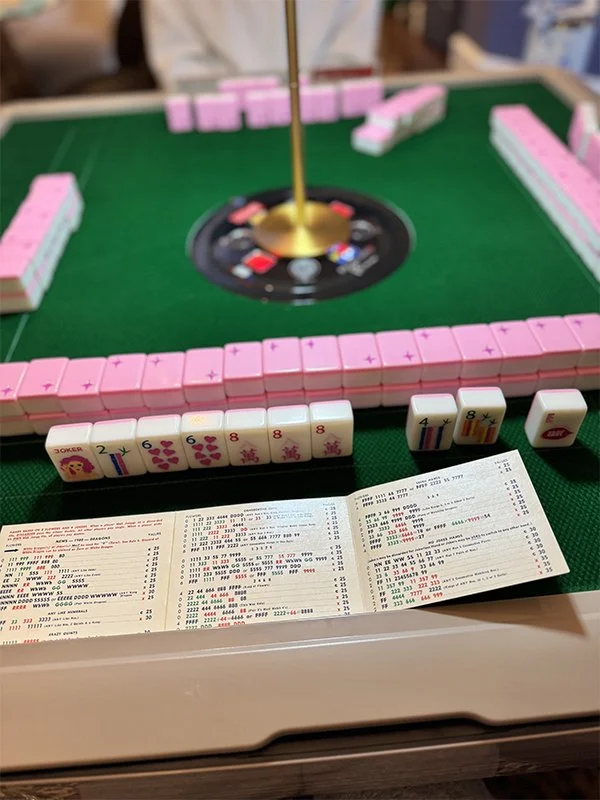
The table is the heart of the space, and its proportions set the tone for everything else. Beyond aesthetics, the right table supports comfortable play, proper tile layout, and natural movement around the room. Too large and the game feels strained; too small and it feels crowded. Selecting the right size and style requires understanding both the game mechanics and the room’s architecture—something best evaluated in context, not from a catalog page.
2. Seating Designed for Real Play
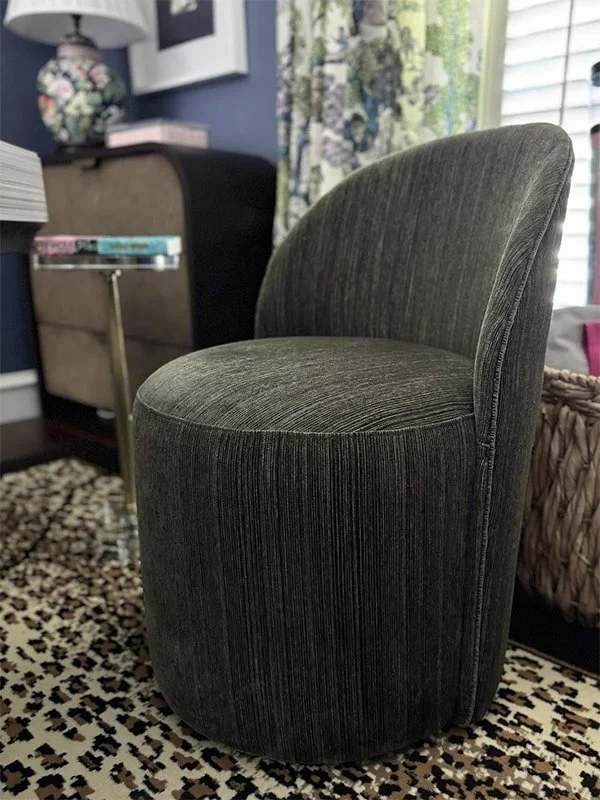
Mahjong is not a quick game, which makes seating one of the most important—and most overlooked—elements. Chairs should offer upright comfort, support extended play, and allow for easy movement around the table.
3. Lighting That Respects the Game
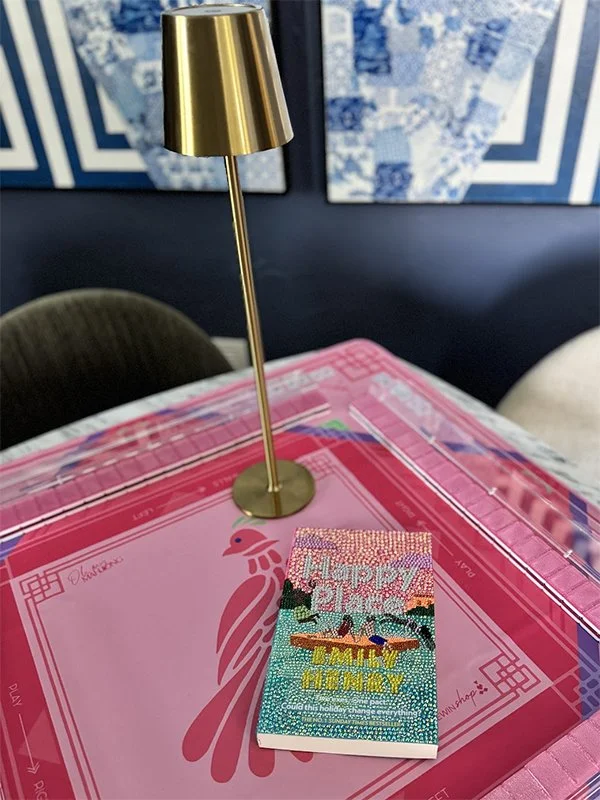
Good lighting in a mahjong room is both functional and atmospheric. Players need clear visibility without glare, shadows, or harsh overhead light. Layered lighting—carefully placed and properly scaled—creates focus at the table while maintaining warmth throughout the room. This is where lighting design becomes less about fixtures and more about experience.
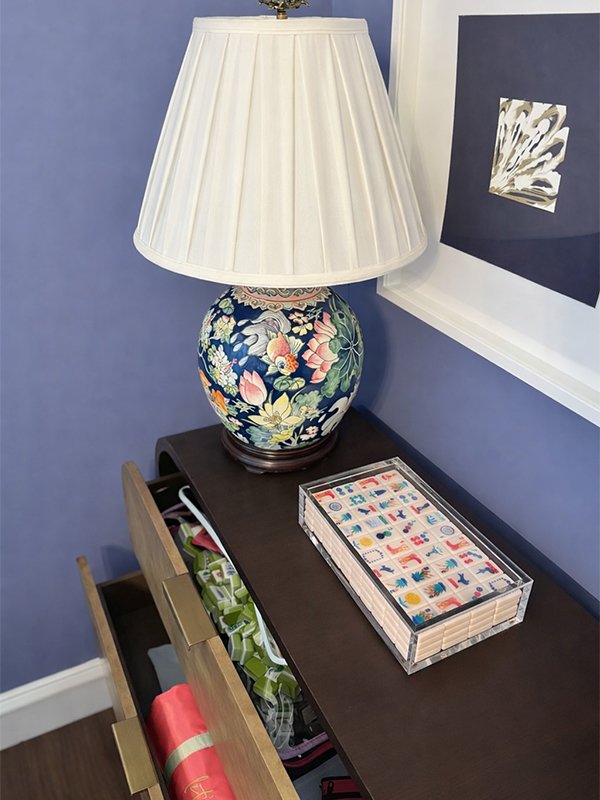
4. Thoughtful Flow and Circulation
A mahjong room should feel easy to move through, even with players seated and accessories in use. Clearances, pathways, and sightlines all affect how comfortable the room feels during play. When circulation is thoughtfully planned, the game flows naturally—and guests stay longer without feeling cramped or distracted.
5. A Space That Reflects the Hostess
Perhaps the most important element of a great mahjong room is personality. This is not a generic game room—it’s a reflection of the hostess. Whether that shows up through color, pattern, artwork, or collected pieces, the room should feel personal and intentional. The best mahjong rooms feel layered and lived-in, designed to welcome friends and spark conversation before the first tile is drawn.
When these elements come together, the result is a room that supports ritual, encourages connection, and feels distinctly its own. A mahjong room done well doesn’t just host a game—it hosts memories.
Why Working With a Designer Makes the Difference
Designing a mahjong room is about more than fitting furniture into a space—it’s about shaping an experience that feels effortless, comfortable, and personal. A designer brings clarity to decisions that are difficult to assess online: proportion, circulation, seating comfort, lighting balance, and how the room functions both during game play and when the home is full of guests.
Just as importantly, a designer helps translate the hostess’s personality into the room itself. The most successful mahjong spaces reflect how the host entertains, what she loves, and how she wants people to feel when they gather. That level of nuance can’t be pulled from a checklist or a product page—it comes from thoughtful planning, tailored recommendations, and an understanding of how design supports the way people truly live.
For homeowners who value connection, hospitality, and spaces that feel intentionally designed rather than assembled, working with a designer ensures the room not only looks beautiful—but works beautifully, too.
If you’re considering a mahjong room - or reworking an existing space - we’d love to help you design one that feels effortless, elegant, and deeply personal. Ready to Book a Call?
